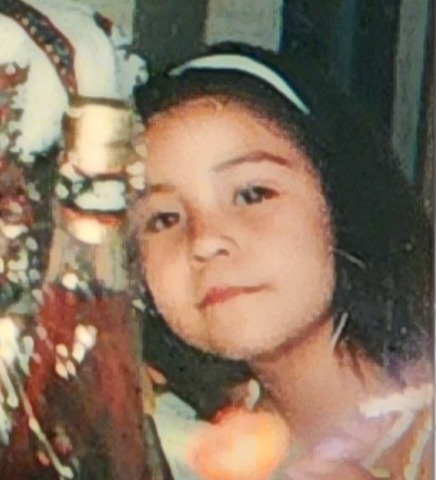
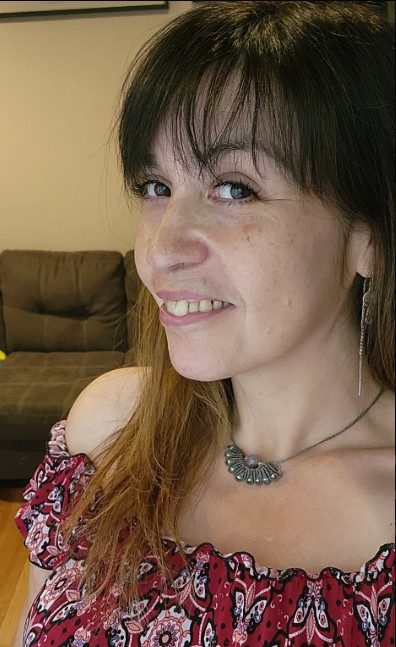
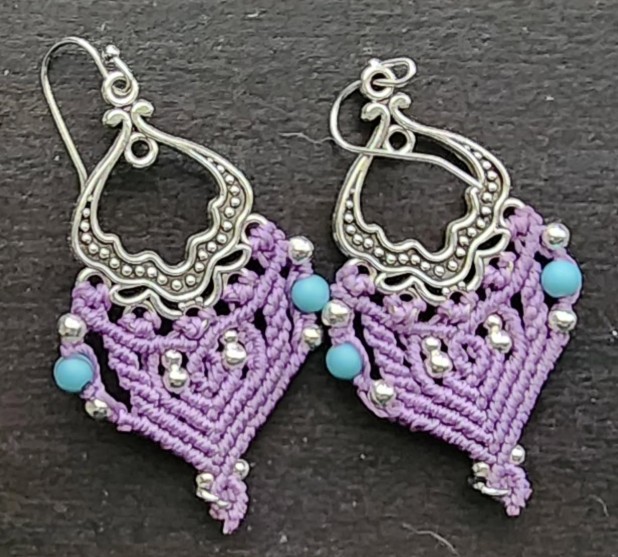
Here are two little windows into my messy, beautiful, haunted heart.
Wander in, stay as long as you like — peek under the memories, trace the soft edges,
maybe even laugh (or cry, that’s allowed too).
These chapters aren’t polished fairy tales. They’re just human.
Come see.
(And if you find a piece of yourself here — well, that’s kind of the point.)
Chapter 2: The Songs That Kept Me Breathing
“I am going to make it through this year if it kills me.” — The Mountain Goats
There was a time I couldn’t listen to music.
Not because I didn’t love it—Ohhh, I did—but because something in me had gone quiet.
It was during the week I tried to disappear.
My body was shutting down, my hope felt cellular, not just emotional.
I wasn’t eating. I wasn’t drinking. And I wasn’t pressing play.
It took me years to notice the silence.
Music has always held me—through breakups and births, trauma and healing, violence and joy.
It has been a translator when words failed, a tether when I felt like I might float away.
And sometimes, the only thing that made me feel like I still existed.
But when depression takes over, even the songs vanish.
Even the songs hurt.
There’s research that shows our heartbeats can actually synchronize with the rhythm of the music we hear.
It’s called entrainment—a biological response where our internal rhythms, like heart rate and breathing, align with external stimuli like sound.
When the beat of a song matches the tempo of our body, it can calm us, energize us, or remind us we’re still here.
Maybe that’s why certain songs felt like CPR—like they were keeping me alive when I couldn’t do it myself.
It’s not just music. When a baby cries, it does so at a frequency that triggers a biological response in the mother—activating her milk letdown reflex.
It’s a primal reminder of how deeply we are wired for sound. How vibrations, pitch, and frequency connect us, sustain us, keep us alive.
My son Eddie loves music too. His heart beats in lyrics.
He introduced me to The Mountain Goats—lyrics sharp and tender like paper cuts.
I started listening because he loved them, but I kept listening because they said things I didn’t know how to say yet.
I think music heals him too, the way it does for so many of us who feel too much and live on the edge of disappearing.
My daughter Shanttel once told me that music is like therapy for her.
That growing up, she felt out of place—like nobody really understood her.
She was far away from me then. Living a different life.
But somehow, she still carried part of me with her in the melodies that soothed her,
in the words that held what no one else could.
We were apart, but maybe music was the language we both understood.
When I went back to Chile in 2021, I visited my friend Valeria.
Her oldest son was there. He looked good—stable, grounded, present—but there was a quiet heaviness in his voice.
He told me that during a long stretch of deep depression, he went nearly two years without listening to music.
Not a single song.
He said it like a confession.
Like he knew something had gone missing and hadn’t known how much it mattered until it returned.
He listens again now. That’s how I knew he was getting better.
There’s science behind this, too.
Music activates parts of the brain tied to memory, emotion, and connection.
It’s processed in the same regions affected by trauma, making it one of the most effective tools for healing.
Some frequencies—like 432 Hz and 528 Hz—are believed to calm the nervous system, support sleep, and even promote cellular repair.
Music therapy has been shown to reduce anxiety, ease pain, and help regulate emotions after trauma.
Sound brings us back to ourselves.
And when music isn’t enough, we find other ways to feel again.
For some of us, it’s THC.
Valeria’s son uses it. I do too. And we’re not alone.
Many people with depression, trauma histories, or chronic stress turn to cannabis because it softens the edges and slows the storm.
That’s not just emotional—it’s biological.
The human body has something called the endocannabinoid system—a vast network of receptors that helps regulate mood, appetite, sleep, memory, and the stress response.
Our bodies actually produce their own cannabinoids, called endocannabinoids, which work like messengers to maintain internal balance, or homeostasis.
When that system is disrupted—by trauma, chronic stress, or illness—we can feel unmoored, dysregulated, or emotionally flooded.
THC and CBD interact with this system. They bind to or influence cannabinoid receptors (CB1 and CB2), offering effects that can range from pain relief and reduced anxiety to enhanced relaxation and emotional grounding.
It doesn’t cure. But it can comfort.
Sometimes just enough to get to the next breath.
This chapter belongs to the silence.
To the almosts.
To the days when nothing helped and the nights when a single lyric did.
I didn’t pray. But I listened. And sometimes, that was enough.
The chapters in this book each carry a song, woven into the memory like a thread of sound.
Some were playing when I broke. Some were playing when I stood back up.
This is the chapter for everything in between.
And the sound that found me again.
I didn’t grow up with peace.
I grew up with chaos—cracks in the walls, silence sharp as knives,
but maybe that’s why I’m so good at finding balance now.
Maybe living inside the storm taught me how to drive through it.
How to find symmetry in the spin.
How to make beauty out of broken things.
“The scene ends badly, as you might imagine, in a cavalcade of anger and fear.” — The Mountain Goats
Chapter 23: Mindless Tranquility
“If I could face them, if I could make amends with all my shadows…” – Of Monsters and Men
It feels scary. Not the kind of scary that makes you run, but the kind that keeps you frozen in place—paralyzed by your own edges. As if your insides had grown spikes, jagged and sharp, pointing outward no matter how gently you try to move.
Every time you reach out—softly, clumsily, lovingly—someone gets hurt. And somehow, it's always your fault.
Conversations start beautifully. There’s laughter, a feeling of closeness, a brief flash of hope that this time, maybe, someone will really get you. But then you say the wrong thing—or the right thing, said in the wrong tone, or at the wrong time—and the warmth disappears. You watch it happen, like watching a flower close its petals in fast motion, and all you can do is blame yourself. The wrongness clings to your words like oil, and no amount of apology seems to wash it off.
I love people madly. Not in a poetic, sweet way—madly, destructively. I love them with a force I can't control. I pour every part of me into them, and then feel empty when they can’t possibly reflect that intensity back. It’s not fair to them. I know that. But it doesn’t stop the ache of knowing they don’t need me like I need them.
Memories don’t fade the way they’re supposed to. If something painful happened ten years ago, I can relive it with the same force as if it happened this morning. My emotional timeline doesn’t move in a straight line—it loops and spirals and crashes into itself. People don't get that. They move on. I never really do.
I try to be kind. I want to be the person who brings comfort. Not because I’m selfless, but because I’m terrified of being blamed for anything else. If everyone is happy, if no one is hurt, then maybe I won't be the reason the room turns cold. Maybe they’ll let me stay.
I’m scared of losing people I barely even know. Scared in a way that makes no sense, even to me. I morph into what I think they’ll like—not because I want to manipulate, but because I don’t know who I am when I’m not mirroring. I study them like maps, trying to figure out how to fold myself into the right shape. I don’t belong anywhere unless I make myself belong. And even then, I feel like an impostor.
I kept thinking of that part in the song—
“I am a stranger
I am an alien inside a structure
Are you really gonna love me when I'm gone?
With all my thoughts
And all my faults.”
It was like they had taken it straight from inside me. Because that’s what it felt like—being a stranger in my own skin, an alien trapped inside these walls I called a body. And I wondered, if I really did slip away, would anyone still love me then? With all of it. All my twisted thoughts. All my faults that never seemed to fit. Maybe that was the deepest ache—not knowing if the answer was ever yes.
Most of the time, I feel like I’m speaking a different language than everyone else. My words come out twisted, misaligned. I mean something gentle, but it sounds harsh. I feel something deeply, but it comes out small and broken. So I’m misunderstood. Constantly. It’s lonely in that space, where your heart wants connection but your mouth can’t keep up with your soul.
I don’t know who I’m supposed to be. Not in the way people figure out their careers or hobbies or favorite colors. I mean, I don’t know what version of me is real. I only know how to become what someone else wants. I only know how to disappear into other people’s expectations. I only know how to perform.
But under all of that—beneath the morphing, the fear, the love, the longing—is a quiet question I don’t dare ask:
What if there’s someone who would love me, even with the spikes?
Borderline personality disorder isn’t always loud. Sometimes it’s the silence between texts. The hours spent rereading messages, wondering what went wrong. It’s the terror that love will vanish without warning, and the shame of needing reassurance you’re too afraid to ask for.
Clinically, it’s called emotional dysregulation. Fear of abandonment. Identity disturbance. But what it feels like—what it actually feels like—is being stuck in a loop of needing and pushing away, loving and ruining, wanting to be close and terrified of being known.
Scientists have found that people with BPD often have heightened activity in the amygdala—the part of the brain responsible for detecting threats and processing emotion. Combine that with a less responsive prefrontal cortex—the part meant to regulate those emotional surges—and it creates a storm. You're not overreacting on purpose. Your brain just throws gasoline on a match before you even know you're holding it.
It’s easy to be called manipulative when no one sees the fear behind your actions. Easy to be labeled dramatic when your brain is wired to feel everything like a scream. BPD is one of the most stigmatized diagnoses, and sometimes I think people hate the label more than they try to understand the person behind it.
And what they don’t see—what I’ve gotten very good at hiding—is how high-functioning it can look. I keep jobs. I smile. I remember birthdays. I text back with exclamation points and hearts. I give advice like I have it all figured out. No one sees the way I spiral after every interaction. No one sees me cry in the bathroom over a silence that didn’t mean anything—or everything. High-functioning just means I’m crumbling quietly.
There’s another part people don’t talk about much—splitting. The whiplash of loving someone so deeply you’d burn yourself just to warm them… only to feel abandoned by a single wrong word and want to disappear from their life entirely. I either worship or retreat. One mistake, one moment of doubt, and my brain flips a switch. I tell myself they were never who I thought they were. That I was foolish to trust. But the truth is, I’m just scared. Scared they’ll hurt me first.
I listen to her sing “I’m well acquainted with villains that live in my head” and I nod, like she wrote it for me. Because I know those villains. I’ve fed them. I’ve believed them. I’ve tried to make peace with them. And still, they haunt.
I used to think this was just who I was—broken in all the ways that matter. But therapy helped me see the difference between a wound and a flaw. I’m still learning. Still rewiring. But I’m not hopeless. Not anymore.
Some days, I still don’t feel real. But now I know it doesn’t mean I’m unlovable.
Now I understand that the spikes aren’t a curse. They’re protection.
And maybe, just maybe, I can learn how to lower them without losing myself.
There’s no off switch.
No pause.
No certainty.
But there is, finally, a little hope.
“Are you really gonna love me when I’m gone?”
 Follow me on Instagram